
.webp)
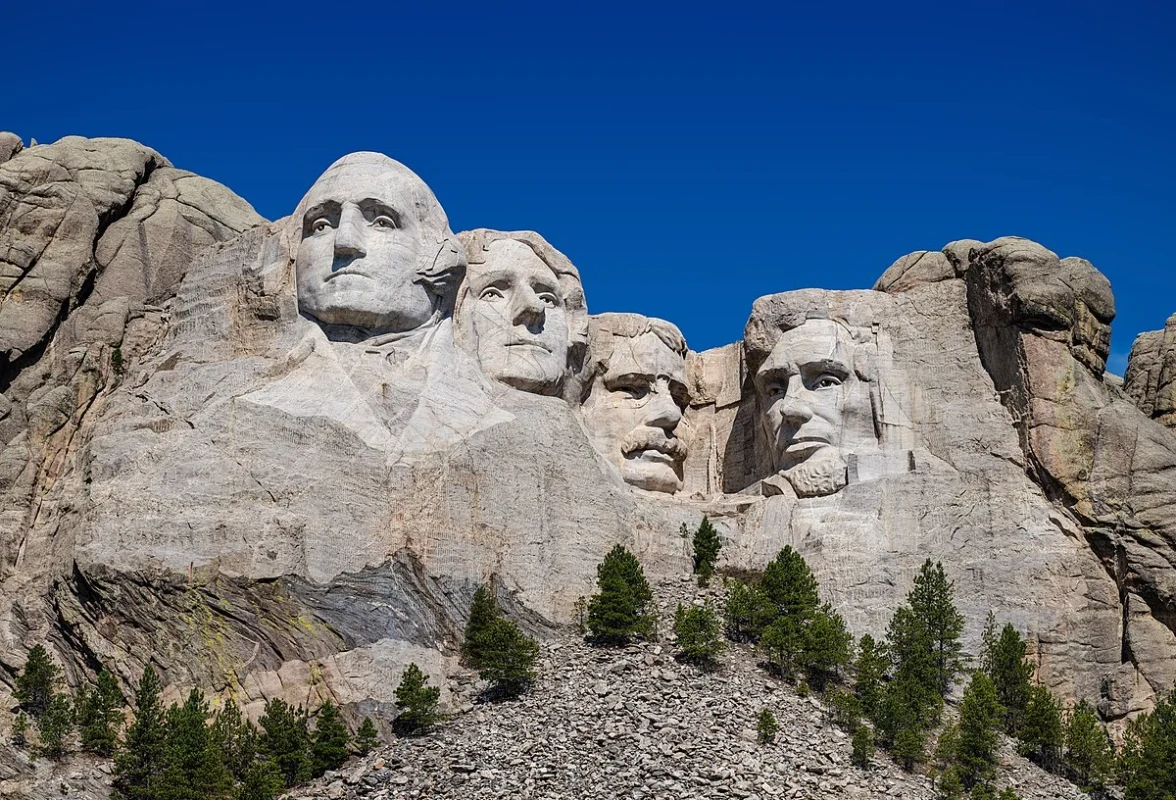
America’s Monument to Democracy and Heritage Carved in Stone
Discover Mount Rushmore National Memorial — the iconic granite monument honoring four legendary American presidents and the ideals of freedom, democracy, leadership, and perseverance.
Introduction
Tall in the Black Hills of South Dakota, Mount Rushmore National Memorial is one of the most iconic symbols of the United States. With the massive faces of four great American presidents – George Washington, Thomas Jefferson, Theodore Roosevelt and Abraham Lincoln – Mount Rushmore is not just a masterpiece of art; it is a tribute to the American ideals of freedom, democracy and perseverance.
Located near the small town of Keystone, the monument attracts more than two million visitors each year who come to witness the majesty of human vision and engineering. The idea behind Mount Rushmore was to celebrate the birth, growth, development and defense of the nation – ideals immortalized in stone by four presidents.
The name “Mount Rushmore” itself was given by a New York lawyer, Charles E. Rushmore, who visited the region in 1885 and asked the locals for the name of the mountain. Since it had no name, it was humorously named after him - a name that later became legendary.
Quick Facts
Monument Height
Each presidential head is approximately 60 feet tall.
Construction Time
The carving project took 14 years to complete.
Workers
More than 400 workers helped carve the granite mountain.
Mount Rushmore is often referred to as the "Temple of Democracy," representing not only the greatness of American history but also the determination of its people to dream beyond imagination.

The giant granite faces symbolize leadership, democracy, and the growth of the United States through history.

The monument rises dramatically above the forests of the Black Hills, creating one of America’s most recognizable landscapes.
Interesting Fact: More than 450,000 tons of granite were removed during the creation of Mount Rushmore, making it one of the greatest engineering achievements in American history.
History and Background
Origins and Beginnings
The idea for Mount Rushmore began with South Dakota historian Doane Robinson, who wanted to attract tourists to his state. Initially, he envisioned carving famous figures of the Wild West—such as Lewis and Clark, Buffalo Bill Cody, and Red Cloud—into the granite pillars of the Black Hills.
However, when sculptor Gutzon Borglum joined the project in 1924, he introduced a far grander vision. Instead of regional figures, Borglum proposed carving the faces of influential American presidents to represent the birth, expansion, development, and preservation of the United States.
Borglum believed the monument should survive for thousands of years and become a lasting symbol of democracy, ambition, and national identity.

The Vision Behind Mount Rushmore
Sculptor Gutzon Borglum transformed a local tourism idea into one of the most ambitious monumental projects in American history.
His dream was to create a timeless sculpture that would symbolize the story and ideals of the United States for future generations.
Construction Timeline
Construction officially began on October 4, 1927, and continued until October 31, 1941. The project faced many difficulties, including dangerous working conditions, harsh weather, and financial problems during the Great Depression.
Workers carved the mountain using dynamite, drills, and precision tools while hanging from ropes and harnesses hundreds of feet above the ground.
1924
Gutzon Borglum redesigned the project into a patriotic national monument.
1927
Official carving work on Mount Rushmore began.
1934–1939
The four presidential faces were gradually completed.
1941
Construction officially ended after Borglum’s death.
Borglum originally planned to carve the presidents from head to waist, but limited funding forced the project to stop after the faces were completed.

Workers used ropes, harnesses, drills, and dynamite to shape the massive granite sculptures.

Construction crews carefully removed thousands of tons of granite while shaping the presidential faces.
Historical Events and Stories
Mount Rushmore became a national symbol during difficult periods of American history, especially during the Great Depression and World War II. Many local miners found employment through the project, helping support families during economically challenging years.
Despite the dangerous conditions, no worker died during the carving process—an extraordinary achievement considering the scale of the project.
Interesting Historical Fact: More than 450,000 tons of granite were removed from the mountain during construction, yet the precision carving work remained remarkably accurate.
The Sacred Black Hills
The Black Hills region holds deep spiritual importance for the Lakota Sioux Nation, who call the area “Paha Sapa,” meaning “Heart of All That Is.” For many Native American communities, the hills are sacred ancestral lands connected to ceremonies, traditions, and cultural identity.
In response to the carving of Mount Rushmore, sculptor Korczak Ziolkowski later began work on the nearby Crazy Horse Memorial, which continues to honor Native American heritage and history.
Geographic Location and Map
Mount Rushmore National Memorial is located in the scenic Black Hills region of South Dakota in the United States. Surrounded by pine forests, granite cliffs, and mountain landscapes, the monument stands near the small town of Keystone in Pennington County.
Country
United States of America
State
South Dakota
Region
Black Hills near Keystone
Elevation
Approximately 5,725 feet above sea level
Map Location
The map below shows the exact location of Mount Rushmore National Memorial in South Dakota, USA.
Visiting Information
Location and Accessibility
Mount Rushmore is easily accessible by road from Rapid City and Keystone. Scenic highways passing through the Black Hills provide breathtaking views of forests, tunnels, and mountain landscapes on the way to the memorial.

Scenic Roads of the Black Hills
The highways leading to Mount Rushmore pass through forests, granite tunnels, and panoramic mountain viewpoints that make the journey unforgettable.
How to Get There
- By Air: Rapid City Regional Airport is the nearest major airport.
- By Road: Visitors can drive from Rapid City through Keystone using Highway 16A.
- By Train: Nearby cities connected by Amtrak provide access to rental vehicles and bus services.
Tickets and Opening Hours
Entry to Mount Rushmore National Memorial is free, though a parking fee is charged for vehicles. The memorial remains open throughout the year, while visitor center hours vary seasonally.
Summer Hours
May – September
5:00 AM – 11:00 PM
Winter Hours
October – April
5:00 AM – 9:00 PM
Parking
Paid parking is available near the memorial entrance.
Best Time
Sunrise and sunset provide the most beautiful lighting for photography.

Observation areas around the memorial provide panoramic views of the giant granite sculptures.
.webp "Mount Rushmore Evening Lighting Ceremony")
The evening lighting ceremony transforms the monument into one of the most memorable nighttime attractions in America.
Travel Tip: Early morning visits usually offer fewer crowds, cooler temperatures, and softer natural lighting for photography.
Travel Tips & Recommendations
Best Time to Visit
The most comfortable time to visit Mount Rushmore is between May and early October, when the weather is pleasant and the skies are generally clear. Summer evenings are especially popular because of the famous lighting ceremony held after sunset.
Early morning visits are ideal for travelers who prefer fewer crowds and softer natural light for photography.

Exploring the Monument
Observation terraces and walking paths around the memorial provide spectacular views of the presidential sculptures and surrounding Black Hills landscapes.
Helpful Travel Tips
- Carry a light jacket because temperatures can become cooler in the hills during evenings.
- Comfortable walking shoes are recommended for trails and observation areas.
- Bring binoculars or a zoom camera lens for detailed views of the carvings.
- Respect local Native American heritage sites and protected natural areas nearby.
Experiences Around the Black Hills
Beyond Mount Rushmore itself, the Black Hills region offers forests, scenic drives, cultural museums, hiking trails, wildlife parks, and Native American heritage experiences. Nearby attractions such as Custer State Park and Crazy Horse Memorial make the region a complete travel destination.

Dense pine forests and scenic mountain roads make the Black Hills one of America’s most beautiful natural regions.

Visitors can explore Lakota cultural traditions, storytelling, local art, and indigenous history throughout the region.

The winding mountain highways and granite tunnels around Mount Rushmore offer unforgettable travel experiences.
Traveler Tip: Sunset is one of the best times to photograph Mount Rushmore because the warm evening light creates dramatic shadows across the granite faces.
Architecture and Design
Architectural Style
Mount Rushmore is not a traditional building or monument—it is a massive sculpture carved directly into a granite mountain. Sculptor Gutzon Borglum designed the monument using neoclassical artistic principles that emphasized realism, balance, and monumental symbolism.
Each presidential face was carefully planned to represent a major chapter in American history:
George Washington
Represents the birth of the United States.
Thomas Jefferson
Symbolizes expansion and national growth.
Theodore Roosevelt
Represents industrial development and progress.
Abraham Lincoln
Symbolizes unity and preservation during the Civil War.

Faces That Represent American History
The giant granite sculptures symbolize leadership, democracy, expansion, progress, and the preservation of the United States through history.
Materials and Construction Techniques
The monument was carved into durable Black Hills granite using dynamite, drills, chisels, and precision hand-finishing techniques. Nearly 90 percent of the mountain shaping work was completed with controlled blasting operations.
Each presidential face stands approximately 60 feet tall, while the eyes alone measure around 11 feet wide. The incredible precision achieved by workers using early 20th-century tools remains one of the monument’s greatest engineering achievements.
Cultural and Historical Significance
National Symbolism
Mount Rushmore is one of the strongest national symbols of the United States. The monument represents democracy, freedom, leadership, perseverance, and the historical development of the nation.
Each presidential sculpture reflects a different stage in American history — from the founding of the nation to expansion, industrial growth, and preservation during difficult times.
Over the decades, Mount Rushmore has appeared in books, documentaries, films, paintings, and educational materials, making it one of the world’s most recognizable landmarks.

A Monument Representing America
Mount Rushmore has become an international symbol of American democracy, leadership, national pride, and historical identity.
Indigenous and Spiritual Importance
Long before the monument existed, the Black Hills were sacred to the Lakota Sioux people. Known as “Paha Sapa,” the region holds deep spiritual and cultural significance connected to ceremonies, traditions, and ancestral identity.
For many Native American communities, the carving of Mount Rushmore remains controversial because the land was historically disputed following westward expansion and broken treaties.
Today, discussions about Mount Rushmore often include both admiration for its artistic achievement and recognition of Native American history connected to the Black Hills.

The Black Hills remain deeply connected to Lakota spirituality, traditions, and cultural heritage.
.webp "Native American Cultural Heritage")
Indigenous traditions, storytelling, art, and ceremonies continue to shape the cultural identity of the region.

The nearby Crazy Horse Memorial honors Native American heritage and reflects the cultural history of the Black Hills.
Influence on Art and Popular Culture
Mount Rushmore has inspired generations of artists, filmmakers, writers, and photographers. The monument has appeared in famous Hollywood films, documentaries, travel magazines, advertisements, and educational programs.
One of its most famous appearances was in Alfred Hitchcock’s 1959 thriller North by Northwest, which helped make the monument even more internationally recognized.
Hollywood Fame
Featured in famous movies, documentaries, and television productions.
Artistic Inspiration
Frequently photographed and painted by artists from around the world.
Global Recognition
One of the most recognizable monuments in the world.
Educational Value
Widely studied in schools as part of American history and culture.
Did You Know? Sculptor Gutzon Borglum originally planned a hidden “Hall of Records” behind the monument to preserve important historical documents for future generations.
Preservation and Legacy
Today, Mount Rushmore is carefully preserved by the National Park Service. Engineers regularly monitor the granite surface for cracks, erosion, and weather-related damage to ensure the monument remains protected for centuries to come.
The memorial continues to attract millions of visitors every year and remains one of the most important cultural and historical landmarks in the United States.
Fun Facts and Trivia
Giant Eyes
Each presidential eye at Mount Rushmore measures approximately 11 feet wide.
Hidden Chamber
A partially completed “Hall of Records” exists behind Abraham Lincoln’s head.
Dynamite Carving
Nearly 90 percent of the mountain carving work was completed using dynamite.
Granite Durability
The granite mountain erodes only about one inch every 10,000 years.
Interesting Fact: Sculptor Gutzon Borglum believed Mount Rushmore should survive for thousands of years and continue inspiring future civilizations.
Conclusion
Mount Rushmore National Memorial stands as one of the most extraordinary artistic and engineering achievements in the modern world. Carved high into the granite mountains of South Dakota, the monument represents the history, ambition, and ideals that shaped the United States.
Beyond its giant stone faces lies a deeper story of vision, determination, sacrifice, creativity, and national identity. From the workers who risked their lives carving granite cliffs to the cultural significance of the sacred Black Hills, Mount Rushmore continues to inspire admiration and discussion across generations.
Whether viewed as a patriotic symbol, an engineering masterpiece, or a world-famous travel destination, Mount Rushmore remains one of the most recognizable monuments on Earth.

A Timeless Monument of Leadership and History
Mount Rushmore continues to symbolize democracy, perseverance, creativity, and the enduring legacy of American history carved into stone.
Dear Explorer,
Great monuments are more than stone and architecture — they are reflections of human ambition, imagination, and history. Mount Rushmore reminds us how powerful ideas can become when vision and determination come together.
As you continue exploring the world through Journey Earth, may every destination inspire curiosity, understanding, and respect for the cultures and stories that shape our planet.
Keep exploring. Keep learning. Keep discovering the wonders of Earth.
Labels: Mount Rushmore, United States, South Dakota, Historical Places, National Memorial, American History, Monument Architecture, Travel Destinations
